When you’re hiring, it’s natural to think about the other employers competing for the same talent.
But in a relatively tight labor market, one of your biggest competitors isn’t another company.
It’s staying put.
During the Great Resignation following the pandemic, changing jobs became almost commonplace. Workers were leaving for the promise of significant pay increases, greater flexibility and new opportunities. When it seemed like everyone was making a move, making one yourself didn’t necessarily feel like much of a risk.
Today, the environment is different.
Many of the people you would most like to hire are already employed. They may not love their current job but they’re not necessarily searching job boards, sending out resumes or willing to take a chance that the grass really is greener somewhere else.
They know what to expect and what’s expected of them. They know their boss. They know their coworkers. They know the benefits and whether they can slip out at 4:30 on Thursday for their kid’s soccer game.
A new job comes with a whole bunch of unknowns.
That means having a good opening isn’t enough. You need to give someone a compelling reason to consider making a change.
Here are five ways to do that.
1. Know why someone should leave a good job for yours.
Before you start recruiting, ask a simple question: Why would someone who is reasonably happy where they are want this job?
If the answer is “competitive pay, great benefits and a great culture,” keep going. Most employers can say the same thing.
Maybe your opportunity offers greater responsibility or a better career path. More flexibility. Stability. The chance to build something. Whatever it is, identify what genuinely makes the opportunity worth considering.
2. Stop writing job descriptions only for people who need jobs.
There’s a difference between describing a position and creating interest in it. You’re not just filling a position. You’re asking someone to make a career decision.
Think about the job from the candidate’s perspective. What will they get to do? What can they learn? Where could the role take them? Why does the work matter?
3. Understand what would make this person move.
Not every candidate wants the same thing. One person may want more money. Another may want advancement. Someone else may be tired of a long drive to work, looking for greater flexibility or ready for a manager who will give them more autonomy.
You can’t know what makes an opportunity compelling until you understand what the candidate wants next.
That’s why good recruiting starts with questions, not a sales pitch.
4. Be specific about what you’re offering.
Candidates have heard all of it: “Great culture.” “Work-life balance.” “Growth opportunities.”
Specifics are more believable. Give people enough information to picture themselves there.
Instead of promising flexibility, explain what flexibility actually looks like. Instead of describing your culture as collaborative, show candidates how the team works together. Instead of promising growth, talk about where this role could realistically lead.
5. Reduce the risk of saying yes.
For someone who already has a job, accepting yours means giving up something known for something unknown. That makes transparency particularly important. Be clear about expectations, compensation, leadership, challenges and what success looks like. Let candidates meet the people they’ll actually work with. Answer the difficult questions honestly.
Ultimately, a successful hire isn’t about convincing someone to leave.
It’s about creating the right match — one where the employer has something meaningful to offer and the candidate sees something worth moving toward.
And the labor market makes that especially important.
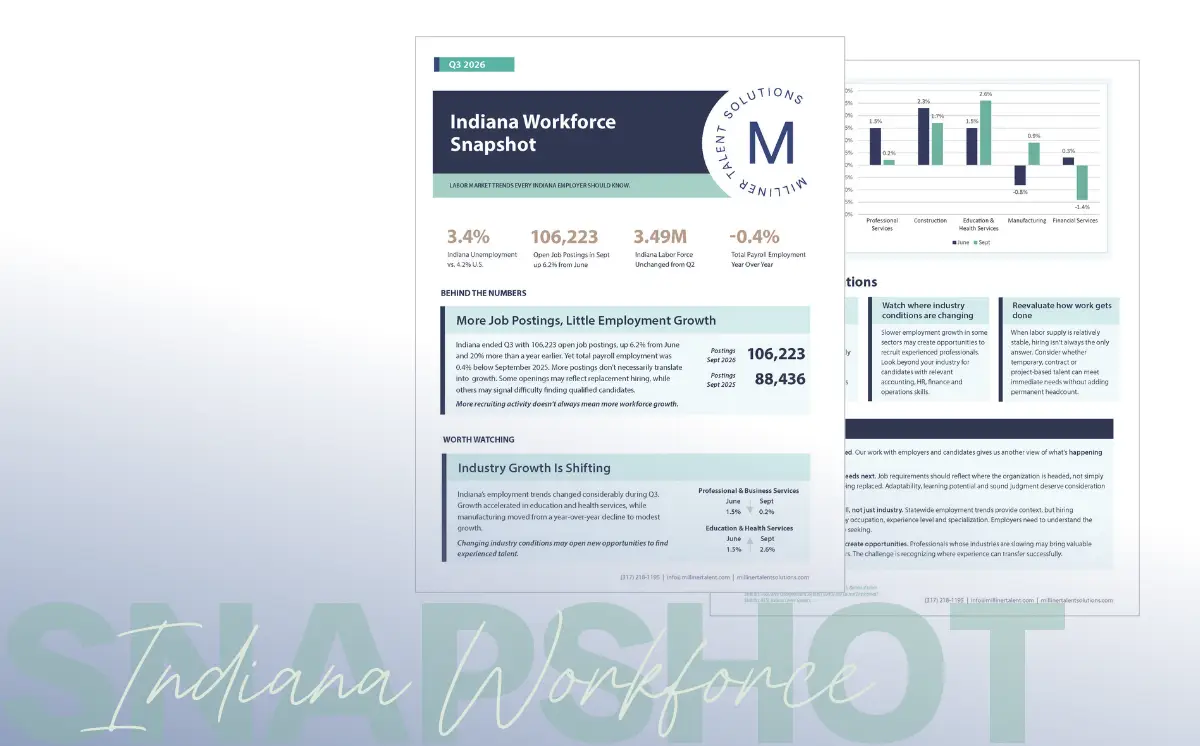
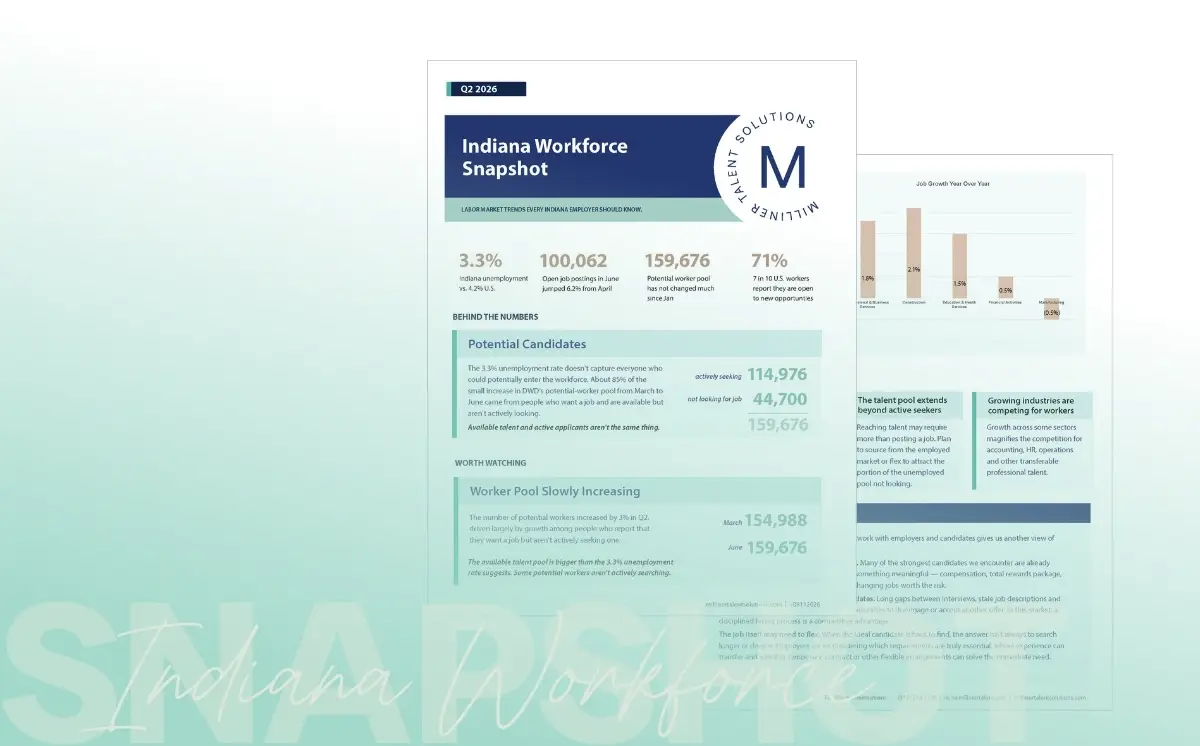
Milliner’s latest Workforce Snapshot helps put the challenge in context. Strong candidates don’t necessarily need to make a move. Many of the experienced people employers want to reach are already working, which means attracting them requires more than simply putting another job into the market.
For employers, that changes the recruiting question.
Don’t just ask:
“Why would someone want this job?”
Ask:
“Why would the right person leave the job they already have for this one?”
If you can’t answer that yet, that’s where your recruiting strategy needs to start.
The Indiana Workforce Snapshot provides a quick look at the labor-market trends Indiana employers should be watching — and our perspective on what those trends could mean for hiring decisions.